


The Serola SI Belt
The Serola SI Belt
Couldn't load pickup availability
A Note from the Clinic: "This is the exact belt I recommend to my patients. When your SI joint is unstable, your body compensates, leading to muscle spasms and pain. The Serola Belt acts as an external ligament, providing your pelvis with immediate mechanical stability it needs so you can get back to an active life."
How It Works: the Serola Sacroiliac (SI) Belt gently wraps around a specific part of the hips to provide essential stability to the base of your pelvis and spine. By acting as a supportive external ligament, it helps encourage a normal, healthy range of motion for the Sacroiliac Joints.
Key Benefits
- Targeted Relief: Helps relieve discomfort caused by pulled muscles, ligament sprains, muscle spasms, and pinched nerves in the hips and pelvis.
- Restores Stability: Provides the mechanical support needed for active recovery and daily movement.
- Non-Restricting: Designed to provide compression and support without limiting your mobility.
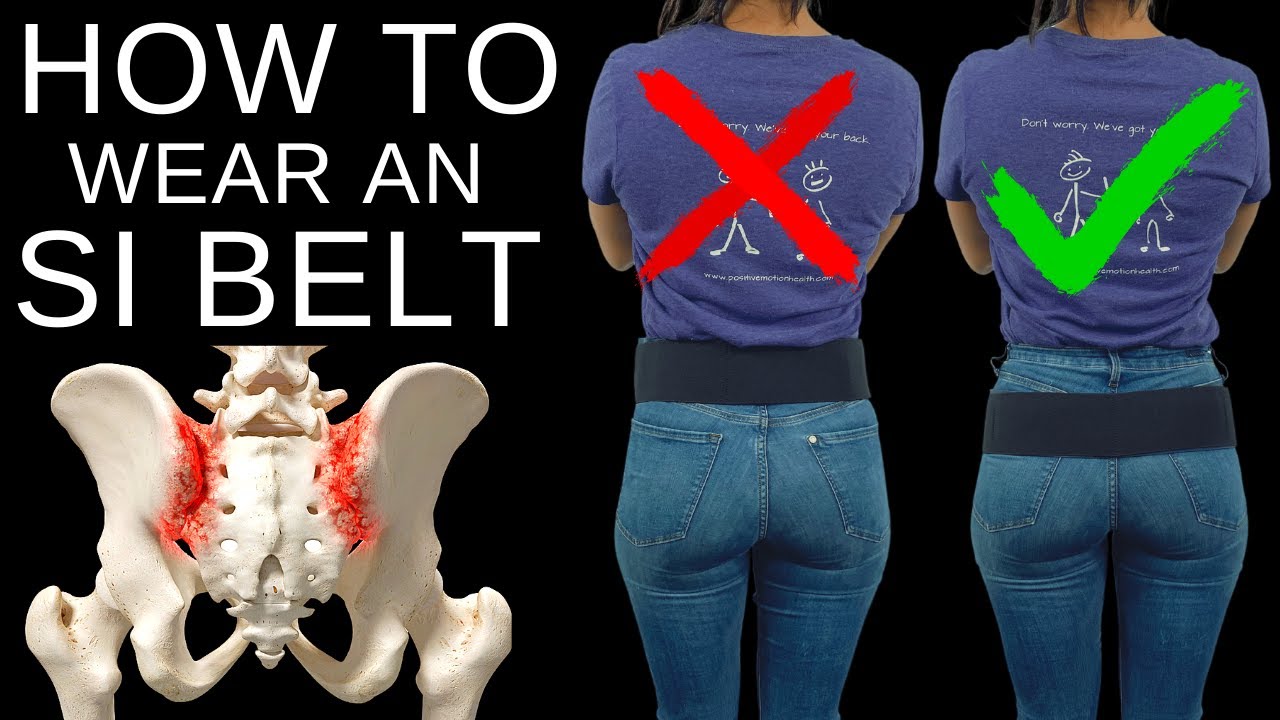
Instructions for Use: Watch this video to learn exactly how to wear an SI belt properly.
Sizing Guide (CRITICAL): The Serola Belt is worn around your HIPS, not your waist. Please measure the widest part of your hips to determine your correct size.
- Small: 30" to 34" Hip Measurement
- Medium: 34" to 40" Hip Measurement
- Large: 40" to 46" Hip Measurement
- X-Large: 46" to 52" Hip Measurement
When sizing, if in doubt between two sizes choose the larger size. If the belt is too small it will not fit, but if a bit too large it will still function properly.
The Biomechanics & Why It Works
The Biomechanics & Why It Works
The sacroiliac joint functions as the central load transfer point between your spine and legs. When seating surfaces lack traction, your sit bones (ischial tuberosities) slide forward.
This movement puts the pelvis into a posterior pelvic tilt, flattening the lumbar lordosis and placing constant tensile stress across the sacroiliac ligaments. In response, your deep lumbar and pelvic stabilizers fire in continuous isometric contraction to prevent further collapse, resulting in muscle spasms, fatigue, and pain flare-ups.
Stabilizing the pelvic foundation removes the need for active muscular guarding, allowing irritated tissues to decompress while sitting.
Specifications & Care
Specifications & Care
Dimensions: 12″ Length x 8″ Width (folds to 6″ x 8″ for travel).
Profile: Ultra-thin (~1/8") to prevent unwanted height changes or interference with contoured seats.
Material: High-density, tear-resistant PVC foam traction mesh. Free of tacky chemical adhesives.
Cleaning Instructions: Hand wash with warm water and mild soap. Rinse completely and lay flat to air dry.
Surface Care Note: Designed for standard vehicle, office, and home seating. Avoid use on unsealed, unfinished, or freshly painted lacquer surfaces. In vehicles subject to extreme direct sunlight and interior summer heat, store the pad in your door pocket or glove console when the car is parked.
Frequently Asked Questions
Frequently Asked Questions
Does this pad use glue or sticky tape?
No. The pad works through friction and textured mechanical resistance, not adhesives. It lifts off cleanly without leaving residue.
Can I use this alongside an SI Joint Belt?
Yes. An SI belt provides external compression around the pelvic ring, while the Anchor Pad prevents the seat slip that stresses pelvic ligaments while sitting. They complement each other directly.
How do I access the exclusive sitting video?
We make it simple whether you love technology or prefer the basics. Inside your package, your quick-start guide includes:
- A Quick-Scan QR Code: Simply open your phone's camera and point it at the code to start watching immediately.
- A Direct Web Link: If you prefer not to scan codes, just type the short web address printed on the card into any internet browser on your phone, tablet, or computer.
Why not just use a lumbar pillow?
Lumbar rolls support the spine from behind, but if your seat bottom is slippery, your pelvis will still slide forward underneath the support. Stabilizing the base of the pelvis keeps your posture supported from the foundation up.


How to Use in 3 Simple Steps
-
1. Place
Lay the pad flat on the bottom of any slick seat where your sit bones make contact.
-
2. Hinge
Hinge slightly forward at your hips as you sit down to preserve your natural pelvic angle.
-
3. Anchor
Rest your weight directly on the pad. Your pelvis locks into position so your lower back muscles can release.
Video
The moment I put it on there was relief. I am wearing it Les and less each day. With the exercises and the belt I feel that within 30 days I will be over a misery I have endured for 10 years. Thank you for your help
Sizing was accurate and it stays in place as you move around. Well constructed.
Haven’t received it yet. How could I review it if I don’t have it
The product is amazing. Great velcro strength. Unfortunately it did not work for me but i know it will for others. It was too narrow for my full figured hips
I truly felt instant relief from my lower back pain as soon as I put the belt on! After wearing it just one day my sciatic nerve pain was gone and I didn’t wake up with it the following day (either)!! It’s unfortunate that it took me so long to learn about the Serola (SI) Belt.